Budapest, Hungary, Sept., 23, 2025
Who would’ve known that we would get a tour of the Art Deco and more of Budapest from an expert in political economy, elections and history? Our guide, Ändras Palatitz, a local 30-something-year-old was phenomenal.
We meet at the Ferris wheel, exchange basic personal information. We start by visiting two shops specializing in a time-honored glazed ceramic technique. I appreciate the fine lines of the statues and gilded serving patterns, and the hallmark fountains in the négyzet (square) just outside the flagship stores. Luis gets the best camera angle to avoid reflection. I think our guide, Andras Palatitz knows I don’t want to spend “that kind of money”.
So he lets us in on a secret. Many Hungarian families owned the dinner service sets and hung on to them through WW2, through the restrictions of the USSR and through the lean years of Hungarian independence. But they pawn them and any collector can buy them at a bargain price at secondhand shops.
That leads us into a discussion about secondhand shops. We learn that donations from all over Western Europe first stop in Hungary before being shipped to Africa. Regular Hungarians—not those in the central circle of Prime Minister for life Orban, his political friends, or his immediate family members, or the Saudi princes with homes here—have limited wardrobes from vintage shops. The shops are everywhere, with the exception of the tourist area, the thoroughfares lined with luxury shop such as Louie Vuitton.
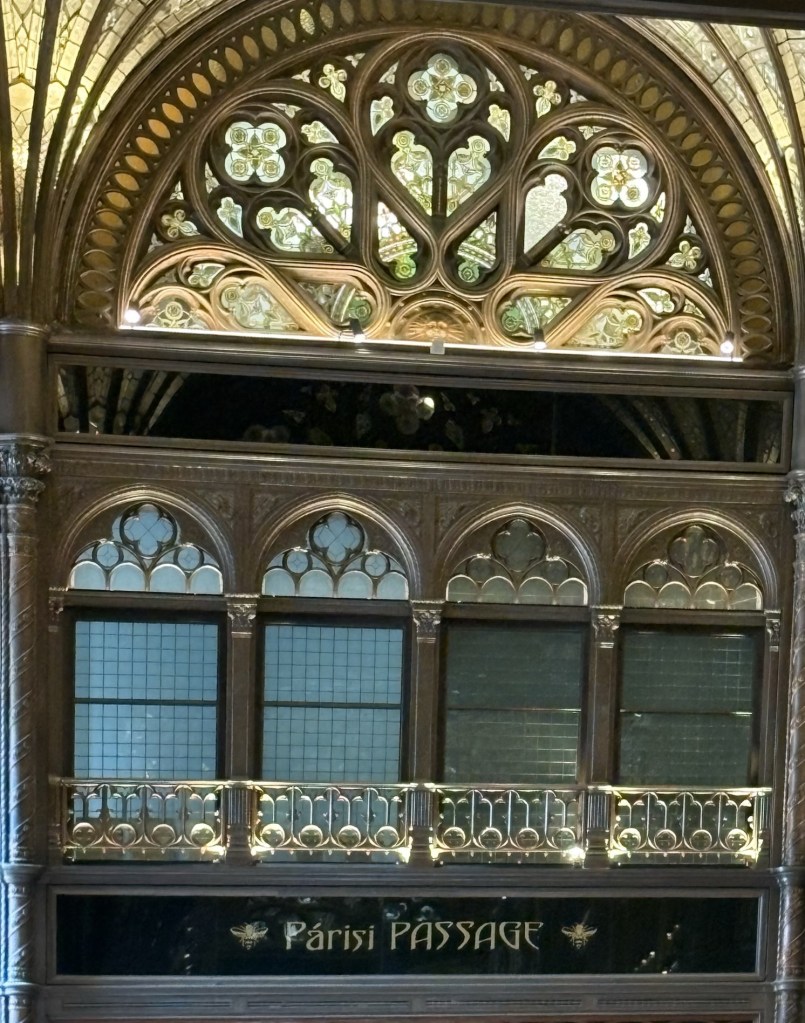
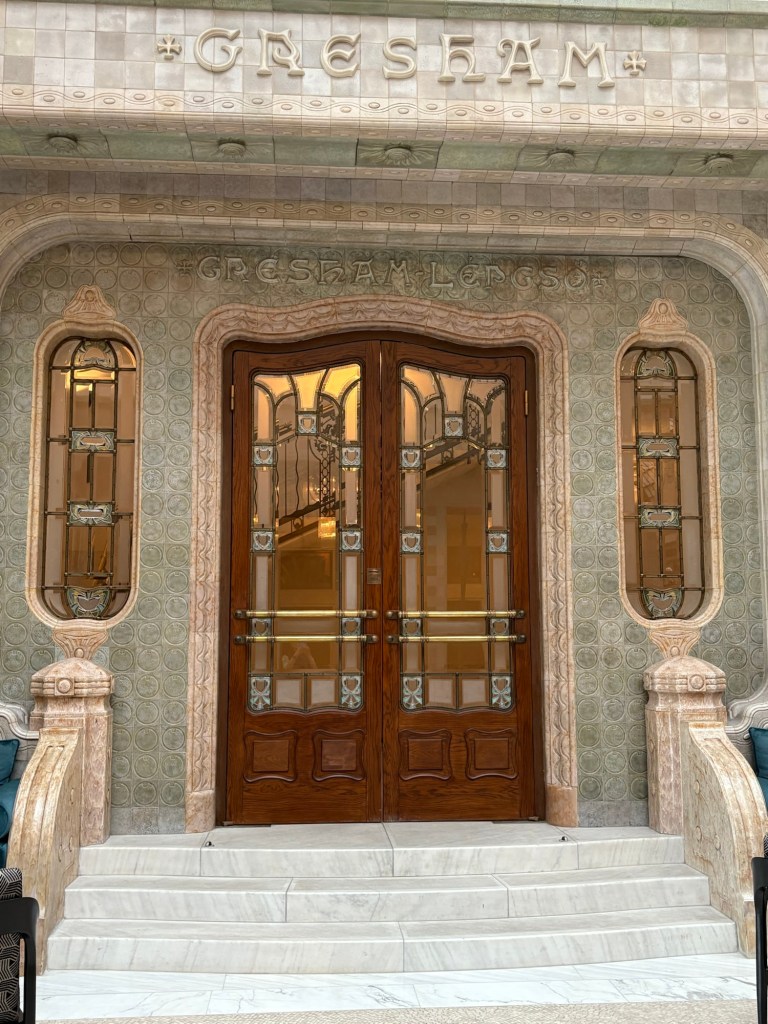
Ändras takes us through the 5-star hotels that are opulently rehabilitated to their former glory. We see the Four Seasons, build originally for the Grisham Insurance company around 1904 on the banks of the Danube. It is breathtaking. We see the lobby of the W Hotel in green velvet seating, stained glass, and tiled bar. Breathtaking. We go across the street to the state opera house to see it, too, dripping in gold and oozing wealth. Extra breathtaking. The Parisi Udvar, extra, extra… well, you get the idea.

We take a ride on the metro with Ändras. We go up town to residences and see large palaces now owned by embassies and the international jet set. They, too, are extravagant. One of these is owned by a bank. It sponsors artists, then owns their work, puts it on display. And has an investment should the time comes when the bank needs to raise capital.

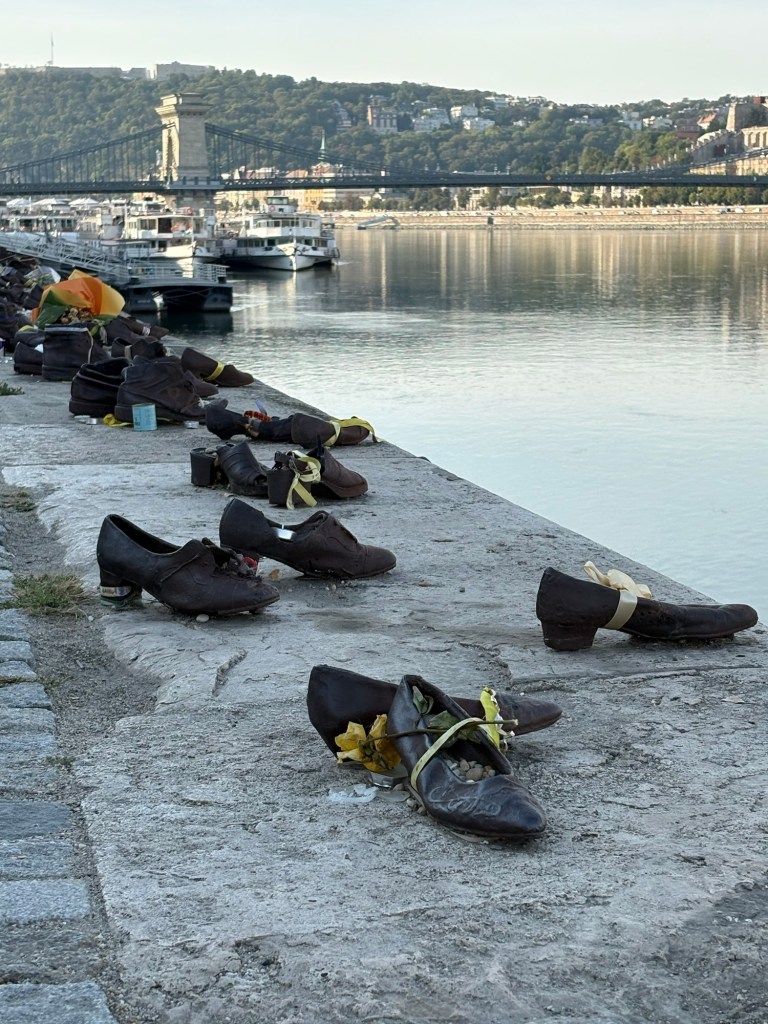
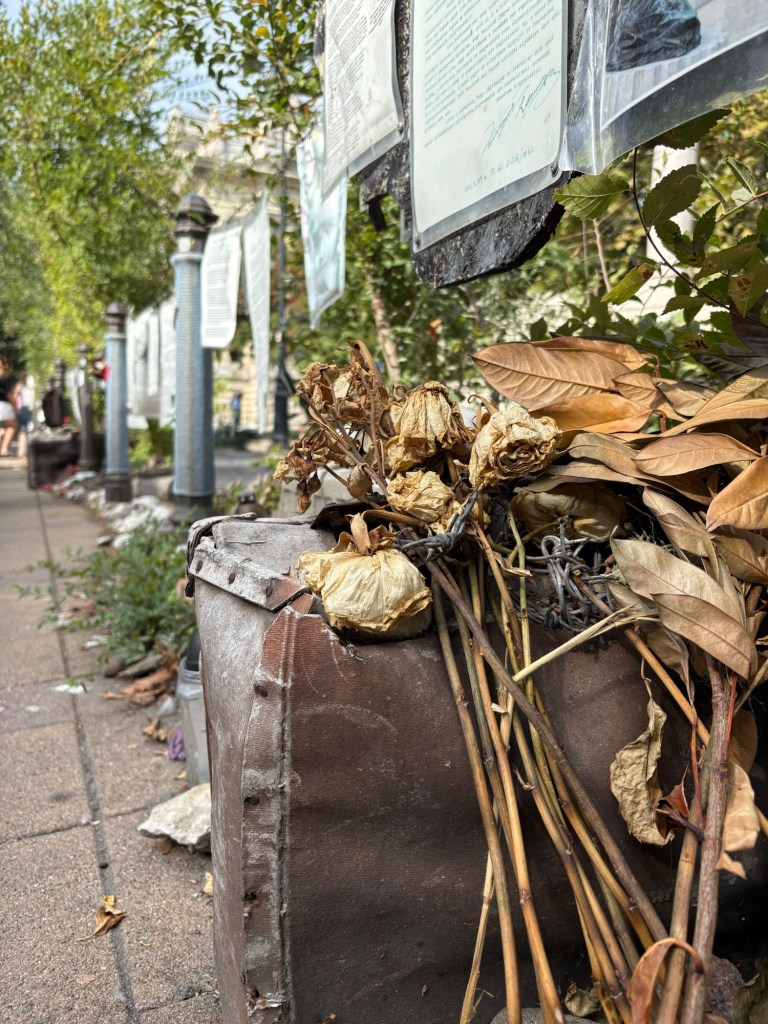
Along with the Art Deco we see the largest synagogue in Europe. Our guide tells us of another one nearby. We see the sad memorials to the victims of the Hungarian and German Nazis. The Hungarian government erected a memorial with an interactive fountain and placed the blame only on Germans. Local Jewish community corrected the version, calling out the homegrown Nazis. The Jewish family members of victims put up a counter memorial next to the fountain with very personal artifacts and flowers for their loved ones.
There is an awful lot of filming here. We see two major productions. One is in the embassy area, another in a dilapidated, yet to be remodeled building on Andrássy. We find out that many film about WW2 and the Cold War are filmed here. The sets are authentic and not much needs to be done to convey the bombed out buildings or gritty gray palettes. Directors have many buildings to choose from.
We eat at Pipa Étterem next to a lovely covered market place. The restaurant is a small family-run place with a mix of residents and some tourists. The large lunch is tasty. The spices are excellent especially the paprika paste. Luis buys a bottle and we wind our way back to our hotel to rest our feet and absorb and that we’ve learned.
We end our day back at our hotel, the W Budapest (!) and put our feet up, exhausted and full of much to consider. Tomorrow we plan to go to Buda Castle.
 Ordinary Gente